2026-11-13 · Carlos Rivera
Step-by-Step Guide to Drying Out a Flooded Fremont Garage
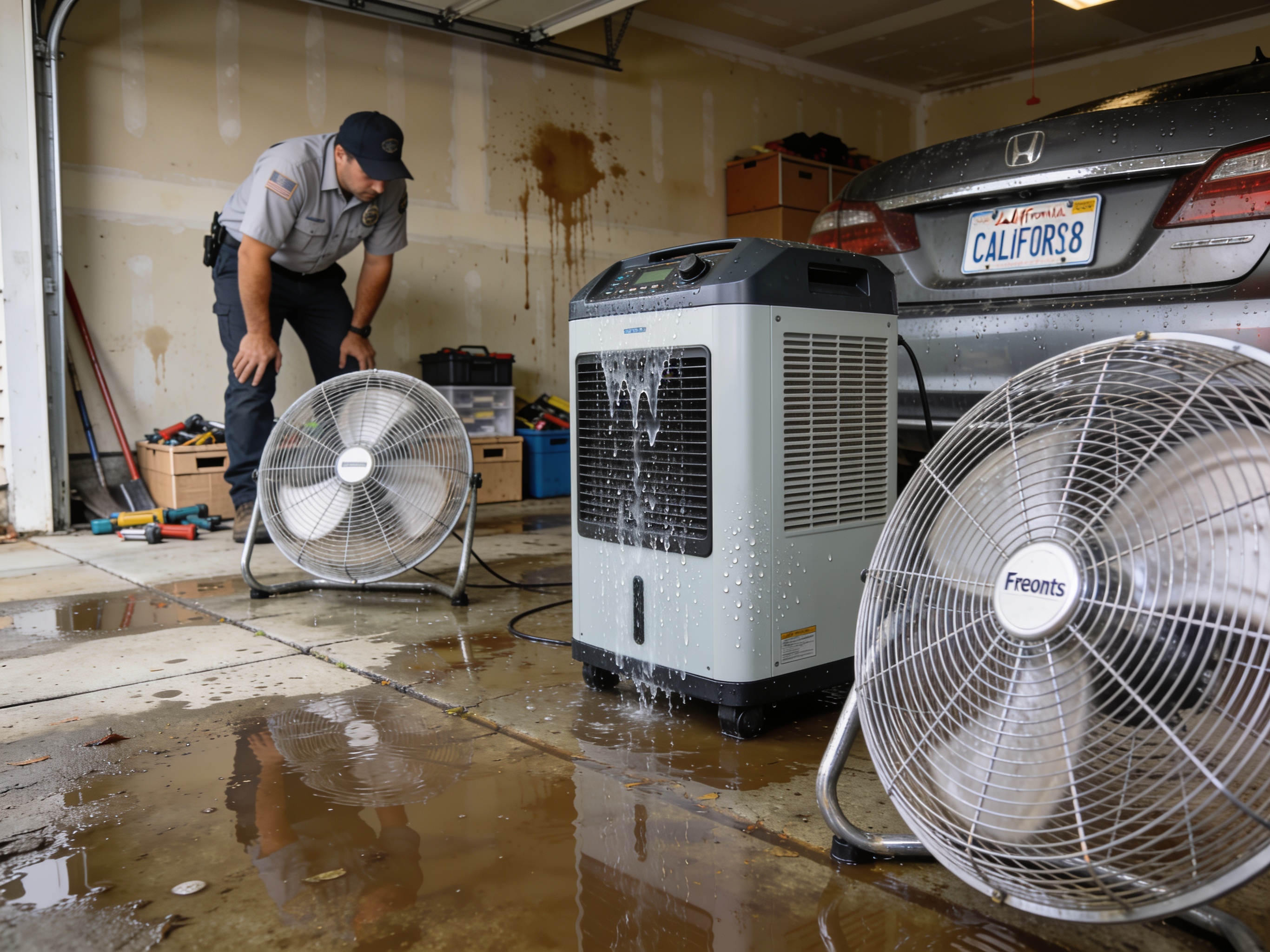
Drying out a flooded garage in Fremont typically takes 3 to 7 days when using commercial air movers and dehumidifiers, though concrete slab homes in older neighborhoods like Mission San Jose or Centerville often need the longer end of that range due to slower moisture release from the ground.
Initial Safety Checks and Damage Assessment
Start by shutting off power to the garage at the main panel if water has reached outlets or appliances. Wear rubber boots and gloves while inspecting for structural issues, especially in homes near Lake Elizabeth where soil saturation can undermine foundations. Check for hidden moisture in drywall, insulation, and any built-in cabinets common in 1960s and 1970s Fremont housing stock. Note the water source and document everything with photos before beginning removal. Homes in Irvington and Downtown Fremont often have attached garages with shared walls, so test adjoining rooms for moisture migration. This early evaluation prevents electrical hazards and guides equipment placement throughout the rest of the process.
Removing Standing Water
Use a wet/dry vacuum or submersible pump to extract visible water within the first few hours. Focus on low spots near the garage door threshold and any floor drains that may back up during heavy rain in Alameda County. In neighborhoods like Warm Springs, where newer construction meets older drainage systems, water can pool against the slab edge and seep under the door. Work from the back of the garage toward the exit to avoid spreading debris. Once bulk water is gone, squeegee the surface toward a drain or exterior door. This step reduces drying time significantly and prepares the space for air movement equipment. Water extraction techniques become essential when volumes exceed what a standard shop vac can handle.
Setting Up Drying Equipment
Position industrial air movers at a 45-degree angle along walls to create airflow across the slab and up into any wall cavities. Place dehumidifiers in the center or doorway to pull moisture from the air without recirculating it. In Fremont's cool summers, run units continuously because ambient humidity stays higher than in hotter inland areas. For garages in Niles or near the Niles Canyon Railway corridor, where older concrete can hold water longer, add floor mats under equipment to protect finishes. Monitor amperage draw so circuits do not overload, especially in homes built before widespread GFCI requirements. Proper setup circulates air evenly and pulls moisture from both the slab and any stored contents.
Monitoring Moisture Levels Over Time
Check moisture readings daily with a pin meter on wood framing and a non-invasive meter on the concrete slab. Target readings below 12 percent on wood and under 4 percent above ambient on concrete before stopping equipment. In Mission San Jose homes with thicker slabs, this process can stretch to five or six days even with good airflow. Track indoor humidity aiming for 40 to 50 percent. Adjust fan positions if readings remain high in corners or under workbenches. Consistent monitoring prevents stopping too early and allows adjustments for seasonal weather shifts typical in Alameda County.
Final Steps and Mold Prevention
Once moisture targets are met, remove any remaining wet insulation or carpet padding and clean surfaces with a mild detergent solution. Improve ventilation by leaving the garage door open during dry daytime hours. In Fremont's climate, this helps finish the process without introducing excess outdoor humidity. Store items off the floor on shelving to reduce future risk. Homeowners in Centerville and Irvington often benefit from reviewing average costs in the area to plan for professional follow-up if needed. Structural drying methods ensure hidden moisture does not lead to secondary issues. For full details on typical expenses, see what Fremont residents pay for water damage restoration on average.