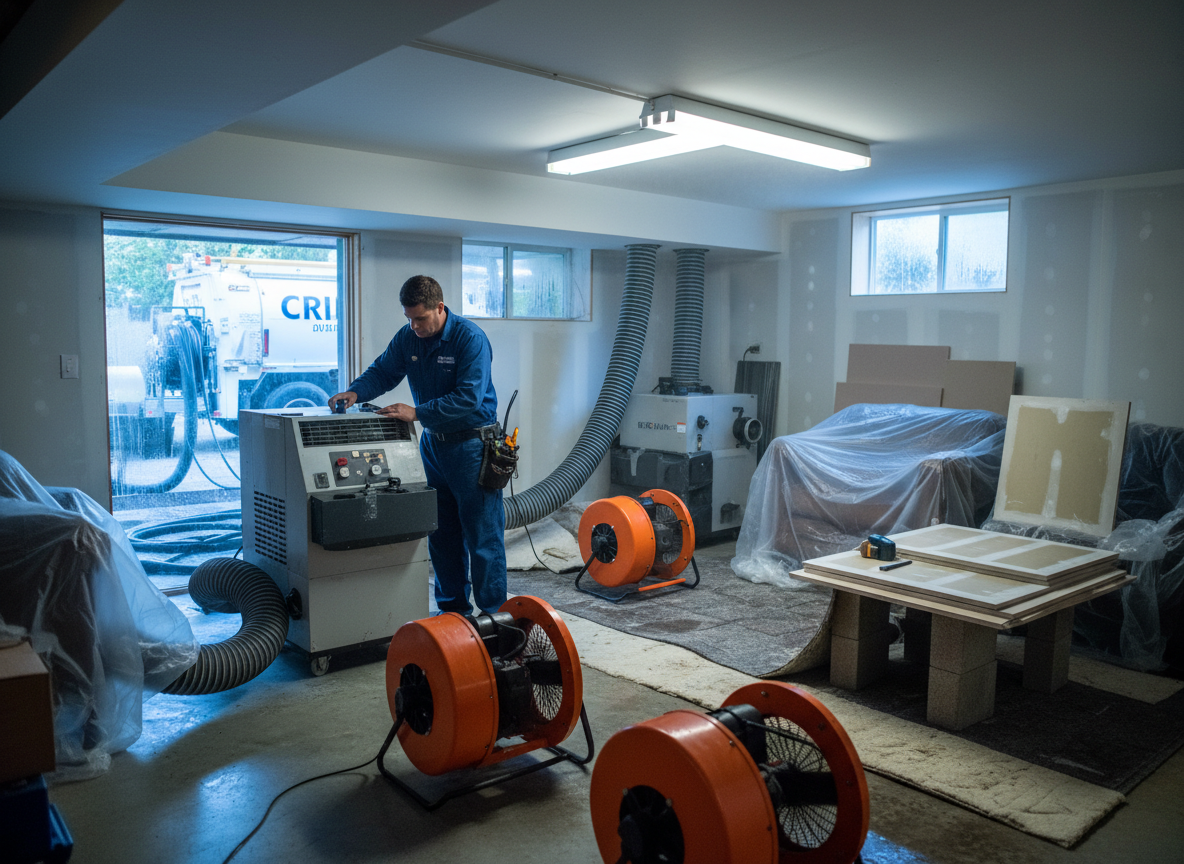
Fremont’s older housing stock in Niles and Mission San Jose often features plaster-over-lath walls and raised foundations that trap water after pipe bursts or roof leaks. These materials dry slowly in the area’s mild Mediterranean climate, where cool summers keep relative humidity elevated and slow natural evaporation. Technicians must use moisture meters to locate hidden saturation behind baseboards and in subfloors before setting up air movers and dehumidifiers, or mold can form within 48 hours.
Homes in Warm Springs and Centerville sit on flatter terrain near the Hayward Fault zone, so slab-on-grade construction is common. Water that reaches the concrete slab requires low-grain refrigerant dehumidifiers and floor mats to pull moisture upward; simply running fans leaves residual dampness that later damages flooring adhesives. Crews monitor daily moisture readings because the region’s occasional winter rains can re-saturate soil against foundations and push additional water inward.
Downtown Fremont and Irvington properties near Lake Elizabeth frequently experience sewer backups or appliance leaks that affect multiple levels. Structural drying here includes cavity drying wands inserted into wall cavities and careful documentation of drying progress to satisfy insurance adjusters. Technicians avoid over-drying historic wood trim common in these neighborhoods, adjusting equipment run times to preserve original materials while still reaching industry-standard moisture content levels.
Technician insight
In Fremont the thing that catches most people out with Structural Drying is hidden moisture in the plaster-over-lath walls common in pre-1960 homes in Niles and Mission San Jose. The mild climate keeps humidity high enough that these cavities stay damp for weeks if you only run surface fans, and the next rain can push more water in from the soil.
Hidden Moisture in Niles Bungalow After Pipe Leak
A kitchen supply line failed in a 1940s bungalow near the Niles Canyon Railway. Water traveled behind cabinets into plaster walls and under the oak floor. We mapped saturation with thermal imaging, inserted cavity wands, and ran dehumidifiers for six days until readings stabilized. The owners avoided mold and kept their original flooring.
Structural Drying Services We Offer
✓Moisture Mapping and Detection
Technicians use thermal imaging and pin meters to locate hidden water in walls and subfloors throughout Fremont homes before drying begins.
✓Industrial Dehumidification
Low-grain refrigerant units pull moisture from the air in Niles and Mission San Jose properties where cool summers keep humidity high.
✓Air Mover and Drying Equipment Placement
Strategic positioning of air movers creates directed airflow across wet materials in Centerville and Warm Springs homes to speed evaporation.
✓Wall Cavity Drying
Specialized wands and injectors remove trapped moisture from plaster and drywall cavities common in older Irvington and Downtown Fremont houses.
✓Hardwood Floor and Subfloor Drying
Floor mats and targeted drying protect oak and maple floors found in many Alameda County homes near the Niles Canyon Railway corridor.
✓Concrete Slab Drying
Mat systems and perimeter drying address water that migrates under slabs in newer Warm Springs and Newark-adjacent properties.
Structural Drying Cost in Fremont, CA
| Service | Typical Range | What Affects It |
|---|---|---|
| Initial Moisture Assessment | $150–$300 | Varies by square footage and number of rooms tested in older Niles or Mission San Jose homes. |
| Daily Equipment Package | $250–$550 | Includes dehumidifiers and air movers; longer runtimes increase cost in high-humidity periods. |
| Wall Cavity Drying Add-On | $200–$450 | Required when plaster walls in Irvington or Centerville trap water behind baseboards. |
| Concrete Slab Drying | $300–$700 | Mat systems and extended runtime needed for Warm Springs slab homes after foundation leaks. |
Ranges are typical for Fremont, CA and confirmed with an exact written quote before any work starts.
How it works
- 1
Initial Assessment
Technicians inspect the property in Fremont neighborhoods, document affected materials, and map moisture levels with calibrated meters.
- 2
Equipment Setup
Air movers, dehumidifiers, and cavity tools are placed based on the structure’s layout and the water’s migration path.
- 3
Daily Monitoring
Moisture readings are recorded each day and equipment is adjusted until materials reach acceptable drying standards.
- 4
Final Verification
Final meter readings and visual inspection confirm the structure is dry before equipment removal and handoff to restoration crews.
Pricing
Pricing depends on the volume of affected materials, equipment runtime, and whether hidden cavities require extra drying time.