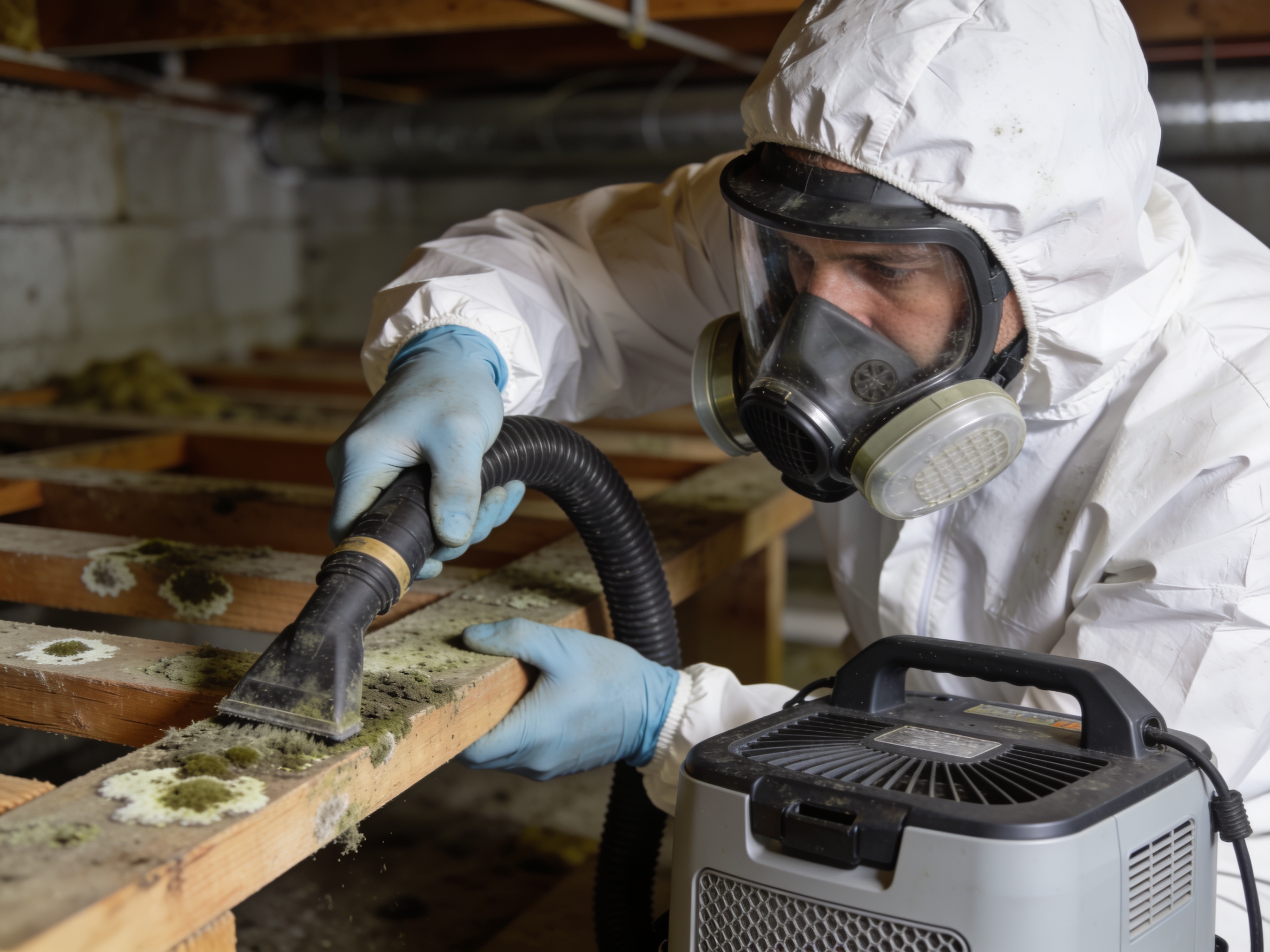
Fremont's mix of 1950s-1970s tract homes in Centerville and Irvington plus post-1980 builds in Warm Springs creates distinct mold patterns. Older stucco and slab-on-grade construction around Niles and Lake Elizabeth traps humidity from the mild Mediterranean climate, especially when cool summers limit evaporation. Water intrusion from roof valleys or poorly graded yards near the Niles Canyon Railway corridor often feeds hidden growth behind drywall and under cabinets. Technicians must pull baseboards and use moisture meters on concrete slabs because surface drying alone fails in Alameda County's clay-heavy soils.
Post-flood or leak jobs in Mission San Jose and Downtown Fremont frequently involve HVAC systems that spread spores through ductwork. Containment with negative air machines is required before any demolition to protect adjacent rooms. Porous materials like carpet pad and insulation must be removed entirely once moisture exceeds 15 percent, while hard surfaces receive HEPA vacuuming and antimicrobial application. Local code enforcement in Fremont expects documentation of clearance testing before any reconstruction begins.
Nearby cities such as Newark and Milpitas share the same weather patterns, so cross-border jobs often involve similar crawl-space and attic issues. Homeowners commonly overlook condensation on metal ductwork in unconditioned garages during the cooler months. Proper dehumidification to 45-50 percent relative humidity prevents recurrence in these microclimates.
Technician insight
In Fremont the thing that catches most people out with Mold Remediation is hidden growth along the slab edges in 1960s homes around Niles and Lake Elizabeth where the cool summers keep moisture from drying out on its own.
Hidden growth after roof leak in Niles
A homeowner in Niles noticed musty odor after winter rains. Inspection found mold behind baseboards and under carpet where roof valley water had wicked into the slab. Containment, removal of affected flooring, and targeted drying restored the space before spores reached the living areas.
Mold Remediation Services We Offer
✓Attic Mold Removal
Inspection and removal of mold growth in attics common to Fremont's older homes where roof leaks meet poor ventilation.
✓Crawl Space Mold Remediation
Encapsulation and mold treatment for crawl spaces in Niles and Centerville homes built on Alameda County's clay soils.
✓Bathroom Mold Treatment
Targeted removal and waterproofing repairs in bathrooms where repeated moisture from showers leads to tile and drywall damage.
✓Black Mold Removal
Safe containment and disposal of Stachybotrys in water-damaged areas of Mission San Jose and Warm Springs properties.
✓HVAC Mold Cleaning
Ductwork inspection and cleaning to stop spore spread in homes near Lake Elizabeth where cool summers keep systems running longer.
✓Post-Water Damage Mold Remediation
Full remediation after leaks or floods in Irvington and Downtown Fremont before secondary damage sets in.
Mold Remediation Cost in Fremont, CA
| Service | Typical Range | What Affects It |
|---|---|---|
| Small bathroom or closet | $600–$1,400 | Increases with tile demolition or hidden wall growth |
| Attic or crawl space | $1,200–$3,000 | Higher when insulation removal and new vapor barrier needed |
| Whole-room remediation | $2,000–$4,500 | Varies by material type and HVAC involvement |
| Post-clearance air testing | $250–$450 | Required for most insurance claims |
Ranges are typical for Fremont, CA and confirmed with an exact written quote before any work starts.
How it works
- 1
Initial Assessment
Technicians inspect affected rooms, test moisture levels in walls and floors, and identify the water source using meters and thermal imaging.
- 2
Containment Setup
Plastic barriers and negative air machines isolate the work area to prevent spores from migrating to unaffected parts of the home.
- 3
Removal and Cleaning
Damaged materials are removed, surfaces are HEPA-vacuumed and treated, then dehumidifiers run until moisture readings drop below safe levels.
- 4
Clearance and Prevention
Air sampling confirms safe levels, then recommendations for ventilation or grading fixes are provided to limit future growth.
Pricing
Cost depends on square footage, hidden growth behind walls, and whether HVAC cleaning is required.