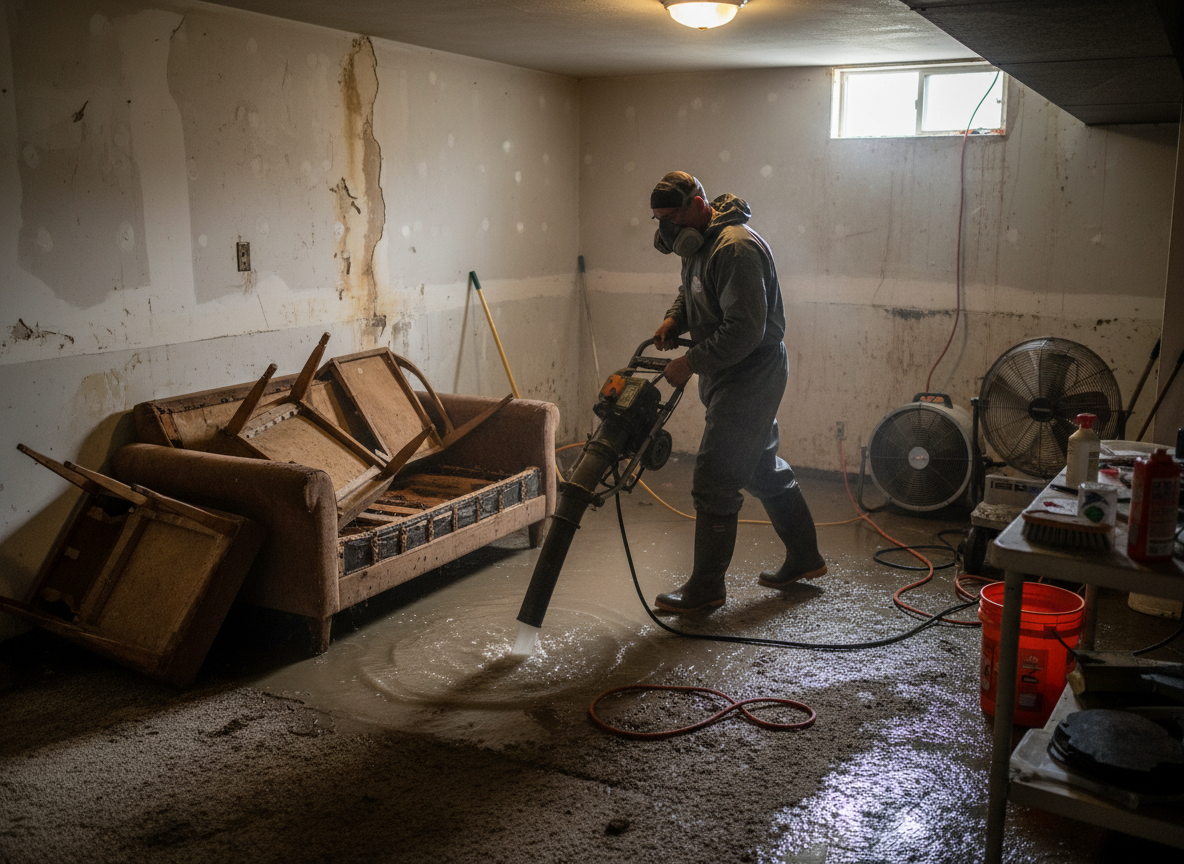
Fremont's older housing stock in Niles and Mission San Jose often features slab foundations and aging galvanized lines that fail during the area's occasional heavy winter rains. When floodwater enters these structures it quickly migrates under cabinets and into wall cavities, requiring moisture mapping with thermal cameras before any drying begins. Technicians must also account for the mild Mediterranean climate that keeps humidity moderate yet allows trapped moisture to linger in stucco exteriors if extraction is incomplete.
In neighborhoods near Lake Elizabeth or along the Warm Springs corridor, surface runoff can enter low-lying garages and basements after sustained rainfall. Crews use submersible pumps rated for silt-laden water followed by air movers and dehumidifiers positioned to create negative pressure and prevent cross-contamination into living spaces. Contents such as area rugs and furniture from these homes are inventoried and moved to climate-controlled drying rooms at the Yale Way facility rather than left on-site where secondary damage can occur.
Alameda County building practices in Irvington and Downtown Fremont frequently include finished lower levels without proper vapor barriers. After flood events, hidden saturation behind drywall or under engineered hardwood requires selective demolition and targeted drying rather than whole-room tear-outs. Failure to address these pockets leads to musty odors that travel through HVAC returns common in ranch-style homes throughout the city.
Nearby cities such as Newark and Union City share similar soil conditions with high clay content that slows natural drainage. This extends drying times for slab leaks and requires additional monitoring days before final clearance testing. Homeowners in these pockets often discover that standard shop-vac methods leave enough residual moisture to support microbial growth within 48 hours.
Technician insight
In Fremont the thing that catches most people out with Flood Damage Cleanup is how quickly water travels under the slab in 1960s Niles and Mission San Jose homes during our cool-season rains; homeowners often stop at visible puddles and miss the moisture that later migrates into adjacent rooms.
Irvington garage flood after winter rain
Water entered a finished garage through the driveway in an Irvington home after sustained rain. Scans revealed saturation under the slab and into the adjacent laundry room wall. Extraction and targeted drying prevented mold growth; the space was cleared for use within five days.
Flood Damage Cleanup Services We Offer
✓Emergency Water Extraction
Rapid removal of standing floodwater from basements and garages using truck-mounted pumps sized for Fremont's typical residential volumes.
✓Structural Drying and Dehumidification
Placement of commercial air movers and dehumidifiers to dry wall cavities and subfloors in older Niles and Centerville homes without promoting mold.
✓Contents Drying and Restoration
Inventory, transport, and climate-controlled drying of furniture, rugs, and documents at the 3730 Yale Way facility for items affected by Mission San Jose flooding.
✓Hidden Moisture Detection
Thermal imaging and moisture meter scans behind drywall and under flooring to locate trapped water common in Warm Springs slab homes.
✓Selective Demolition
Targeted removal of saturated drywall, baseboards, and insulation while preserving salvageable materials in Irvington properties.
Flood Damage Cleanup Cost in Fremont, CA
| Service | Typical Range | What Affects It |
|---|---|---|
| Single-room flood extraction and drying | $650–$1,200 | Increases with slab leaks or finished basements in older Niles homes |
| Whole-home drying after storm runoff | $1,800–$3,500 | Higher when multiple levels or HVAC contamination is present |
| Contents drying and storage | $400–$900 | Based on volume of rugs, furniture, and documents moved to Yale Way |
Ranges are typical for Fremont, CA and confirmed with an exact written quote before any work starts.
How it works
- 1
Arrival And Safety Assessment
Technicians arrive from the Yale Way location, shut off utilities, and evaluate structural safety before entering flooded areas in Fremont homes.
- 2
Water Removal
Standing water is extracted using pumps and vacuums, with water directed away from neighboring properties in dense neighborhoods like Downtown Fremont.
- 3
Drying Setup
Equipment is positioned for directed airflow and dehumidification while monitoring daily moisture levels in wall cavities and under slabs.
- 4
Final Clearance
Post-drying verification with meters confirms dryness before reconstruction or homeowner re-entry.
Pricing
Pricing depends on water volume, affected square footage, and whether contents require off-site drying.