2026-11-13 · Carlos Rivera
Handling Water Intrusion From Fremont's Earthquake-Related Plumbing Issues
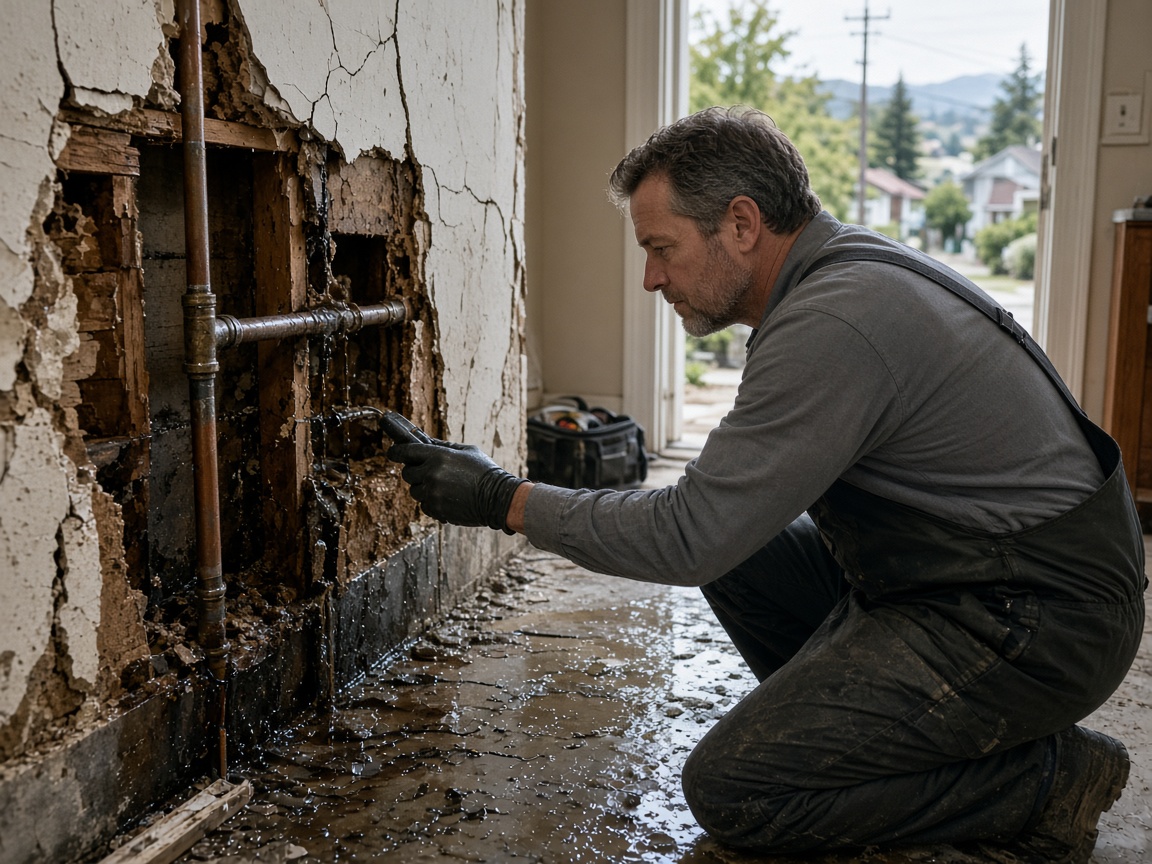
Fremont properties in neighborhoods such as Niles, Irvington, and Mission San Jose often see water intrusion begin within hours of an earthquake when rigid galvanized or copper lines shift or crack at joints. Homeowners should shut off the main valve at the first sign of leaks and contact a restoration team for extraction before moisture reaches subfloors or wall cavities.
Recognizing Plumbing Failures After Seismic Events
Earthquakes along the Hayward fault send shock waves through Alameda County that stress pipe connections in homes built before the 1980s, especially in Centerville and Warm Springs where many structures still contain original galvanized lines. Look for sudden drops in water pressure, damp spots near water heaters, or hissing sounds behind walls in kitchens and bathrooms. Older single-story ranch homes common in Downtown Fremont and around Lake Elizabeth are particularly vulnerable because their crawl spaces allow water to pool unseen for days. Residents in nearby Newark and Union City report similar issues when tremors travel through the flat terrain and loose alluvial soils that amplify ground movement. Checking under sinks and at water heater connections immediately after any noticeable shake helps catch small breaches before they saturate drywall or carpet padding.
First Actions to Limit Intrusion
After confirming a leak, isolate the affected section by closing individual shutoffs rather than the whole house supply when possible. Move furniture and stored items away from wet zones in garages or basements common in Mission San Jose properties. Document the damage with photos that include timestamps for insurance purposes. In Fremont's mild Mediterranean climate, evaporation happens slowly during cool summer evenings, so standing water can remain for extended periods if not extracted mechanically. Avoid using household fans alone because they can spread spores once mold begins forming on damp wood framing. Instead, call for professional assessment that includes moisture meters to locate hidden saturation in subfloors typical of 1960s-1970s construction found throughout Irvington and Warm Springs.
Extraction and Structural Drying Process
Technicians begin with water extraction using truck-mounted pumps capable of removing dozens of gallons per minute from saturated carpets and pads. They then place air movers and dehumidifiers calibrated for the region's moderate humidity levels to bring moisture content below 15 percent within 48 to 72 hours. In crawl spaces under Niles homes, they often install directed drying systems because standard fans cannot reach tight areas where pipes run along foundation walls. This approach prevents secondary damage that frequently appears in Milpitas border homes when moisture migrates through shared soil conditions. Monitoring continues daily until readings stabilize, at which point any necessary pipe burst restoration can proceed without risking trapped moisture behind new drywall.
Long-Term Prevention and Monitoring
Homeowners in earthquake-prone sections of Fremont can reduce future risk by replacing rigid pipe sections with flexible connectors at water heaters and under sinks, a retrofit many Mission San Jose properties have completed after past events. Annual inspections of shutoff valves and pressure regulators help identify corrosion accelerated by the area's occasional ground movement. After any tremor above magnitude 4.0, a quick walkthrough of utility rooms in Centerville and Downtown Fremont homes catches early leaks before they reach the levels seen in recent Union City cases. Keeping contact information for 24-hour response teams ensures extraction begins before the next cool evening allows condensation to compound the problem. For average cost details on these combined services, see what Fremont residents pay for water damage restoration on average.